


EXERCISE PHYSIOLOGY · MOOREBANK
Exercise for Knee Osteoarthritis: A Moorebank Guide
Practical, individualised exercise guidance to support knee strength, movement and everyday function.
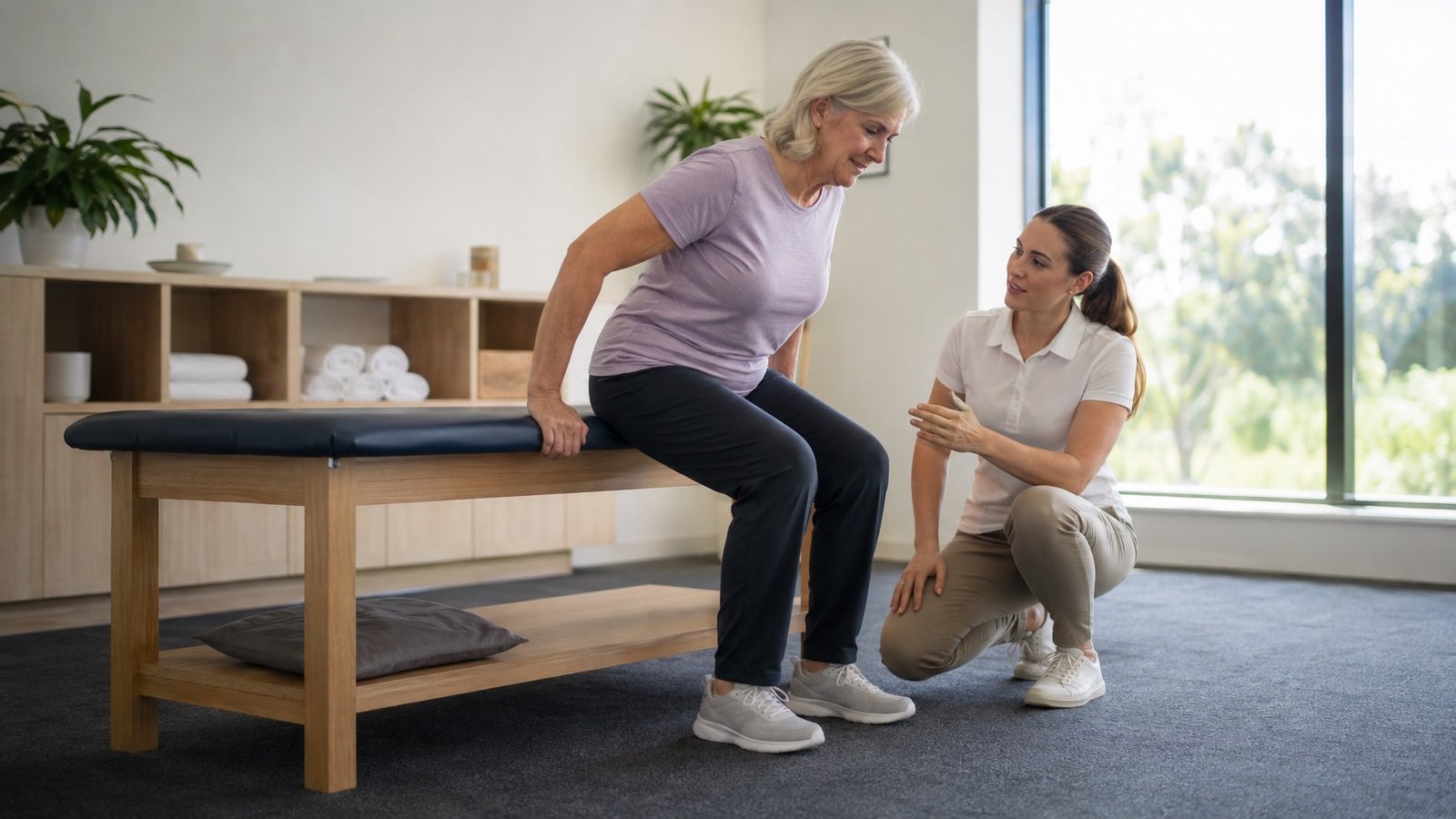
Knee osteoarthritis can make ordinary tasks feel unexpectedly demanding. Getting up from a chair, walking through the shops, taking stairs or keeping up with family can all become harder when your knee is painful or stiff.
It is understandable to worry that exercise will make an arthritic knee worse. In many cases, the right type and amount of movement can be an important part of managing knee osteoarthritis. Exercise is not about pushing through severe pain or following a generic online workout. It is about finding a realistic starting point, building strength and confidence gradually, and choosing activity that fits your body and your life.
At One Stop Physio, our Exercise Physiology service in Moorebank provides individual exercise assessment, programming and progression.
What is knee osteoarthritis?
Osteoarthritis is a common joint condition. In the knee, it can contribute to pain, stiffness, swelling and reduced movement. Symptoms vary between people and can fluctuate over time. An X-ray can sometimes be useful, but it is only one part of the picture: your symptoms, goals, health conditions and function matter too. See our guide on when an X-ray or scan may be helpful after an injury.
Why exercise is recommended for knee osteoarthritis
Staying active can sound counterintuitive when a knee hurts. However, regular exercise can help keep joints and muscles healthy, flexible and strong. Exercise does not cure osteoarthritis or reverse every joint change, but it can be a practical way to improve strength, movement and the ability to do daily activities.
The goal is not to find one perfect exercise. It is to build a plan you can continue. A program that is tolerable and enjoyable enough to repeat is generally more useful than a hard session that leaves you too sore to move for the next week.
What types of exercise may help?
Strength exercises
Strength work may target the muscles that help control the hip, knee and ankle. Depending on your assessment, this might include sit-to-stand practice, step-ups, resistance-band work, leg exercises or other functional movements. The right starting load is individual.
Mobility and flexibility work
Gentle movement can be useful when stiffness makes it harder to straighten or bend the knee. Mobility work is not about forcing a joint into painful positions. It is about helping you move comfortably enough to participate in the activities you value.
Aerobic activity
Walking, cycling, swimming and water exercise may support general fitness. If walking flares symptoms quickly, cycling or water-based activity may be a manageable place to begin. If you enjoy walking, a graded plan with shorter bouts and planned recovery may be more realistic than one long walk.
Balance and functional exercise
Balance, step practice and other functional tasks can be included when they relate to your goals, such as feeling steadier at home, returning to social walks or managing stairs.
How do you know whether you are doing too much?
A short-term increase in symptoms can happen when you introduce a new activity. That does not automatically mean you have caused damage, but it is important to pay attention to how your knee responds. Change one variable at a time: duration, resistance, repetitions, walking distance or frequency. Keep a simple note of the activity and how your knee feels later that day and the following day.
Ease back and seek individual advice if pain is severe, swelling is increasing, the knee feels unstable or locked, or symptoms are not settling after reducing activity. An assessment is particularly important after a recent injury, surgery or fall.
Exercise Physiology and Physiotherapy: which is right?
Both services may be helpful, and both can include exercise. Exercise Physiology is particularly useful when you want individual assessment, exercise programming and graded progression for strength, mobility, fitness, function or long-term health management.
Physiotherapy may be the right first appointment if your knee pain is new, suddenly worse, follows an injury, or you need assessment of a specific movement or joint concern. Our Physiotherapy service in Moorebank can assess a broad range of knee and musculoskeletal concerns.
Everyday strategies that can support your plan
- Break up long periods of sitting with comfortable movement.
- Choose an activity you are likely to continue.
- Pace bigger tasks such as gardening, housework or shopping.
- Wear shoes that feel stable and comfortable for the activity.
- Talk with your GP or health professional about broader health needs where relevant.
When should you seek urgent medical help?
Seek urgent medical care for severe pain after a significant injury, a visible deformity, an inability to bear weight, a hot and very swollen joint with fever or feeling unwell, or other concerning symptoms.
Get support with knee osteoarthritis exercise in Moorebank
A tailored program can start with your current capacity and build from there. One Stop Physio offers Exercise Physiology at 132 Nuwarra Road, Moorebank. Book your Moorebank appointment through our existing Halaxy booking pathway, or call us on 0482 047 813 if you would like help choosing between Exercise Physiology and Physiotherapy.
This article provides general health information only. It does not replace individual assessment, diagnosis or medical advice. Exercise recommendations should be tailored to your circumstances.
Building a routine you can maintain
The most useful plan is usually the one that can fit around your week. That may mean a short strength session at home, a walk broken into manageable intervals, or exercises linked to a daily routine. Starting modestly can make it easier to notice what helps and to progress without a sudden, unmanageable flare.
Review is part of the process. If an exercise is too difficult, too easy, or no longer matches your goals, the program can be changed. Your exercise plan should reflect your response, confidence and the activities you want to return to.
Preparing for your first appointment
Wear comfortable clothing and shoes that allow you to move safely. Bring any relevant referrals, reports, imaging or a list of medications if these apply. It is also helpful to think about the activities you want to make easier: perhaps walking around Moorebank, keeping up with grandchildren, getting out of a low chair or returning to a preferred form of exercise.
A private Exercise Physiology appointment does not usually require a referral. If your appointment involves Medicare, NDIS, DVA, workers compensation or CTP, call us before booking so we can help confirm the pathway and any documentation that may be needed.
Frequently asked questions
Is exercise safe with knee osteoarthritis?
Exercise is commonly recommended, but the type and starting level should suit your symptoms, health history and current capacity.
Will exercise make my knee osteoarthritis worse?
Some short-term soreness can occur. Severe pain, increasing swelling, locking, instability or symptoms that do not settle need individual assessment.
What is the best exercise for knee arthritis?
There is no single best exercise for everyone. Strength, mobility, aerobic and balance exercises can all be useful when matched to your goals.
Should I see an Exercise Physiologist or a Physiotherapist?
Exercise Physiology can help with individual exercise assessment and progression. Physiotherapy may suit a new injury, sudden change in pain or specific movement concern.
Do I need a referral?
A referral is not required for a private appointment. Medicare, NDIS, DVA, workers compensation and CTP pathways may have referral, plan, provider or approval requirements.