


SHOULDER PAIN · ROTATOR CUFF REHABILITATION
Rotator Cuff Shoulder Pain: What Should You Do?
Shoulder pain when lifting your arm can be frustrating, especially when it affects work, sport, sleep or simple tasks such as reaching into a cupboard. The rotator cuff is a group of muscles and tendons that helps control the shoulder. Many people improve with an individual rehabilitation plan that restores comfortable movement and progressively builds strength.
Published by One Stop Physio · 15 September 2026
The short answer
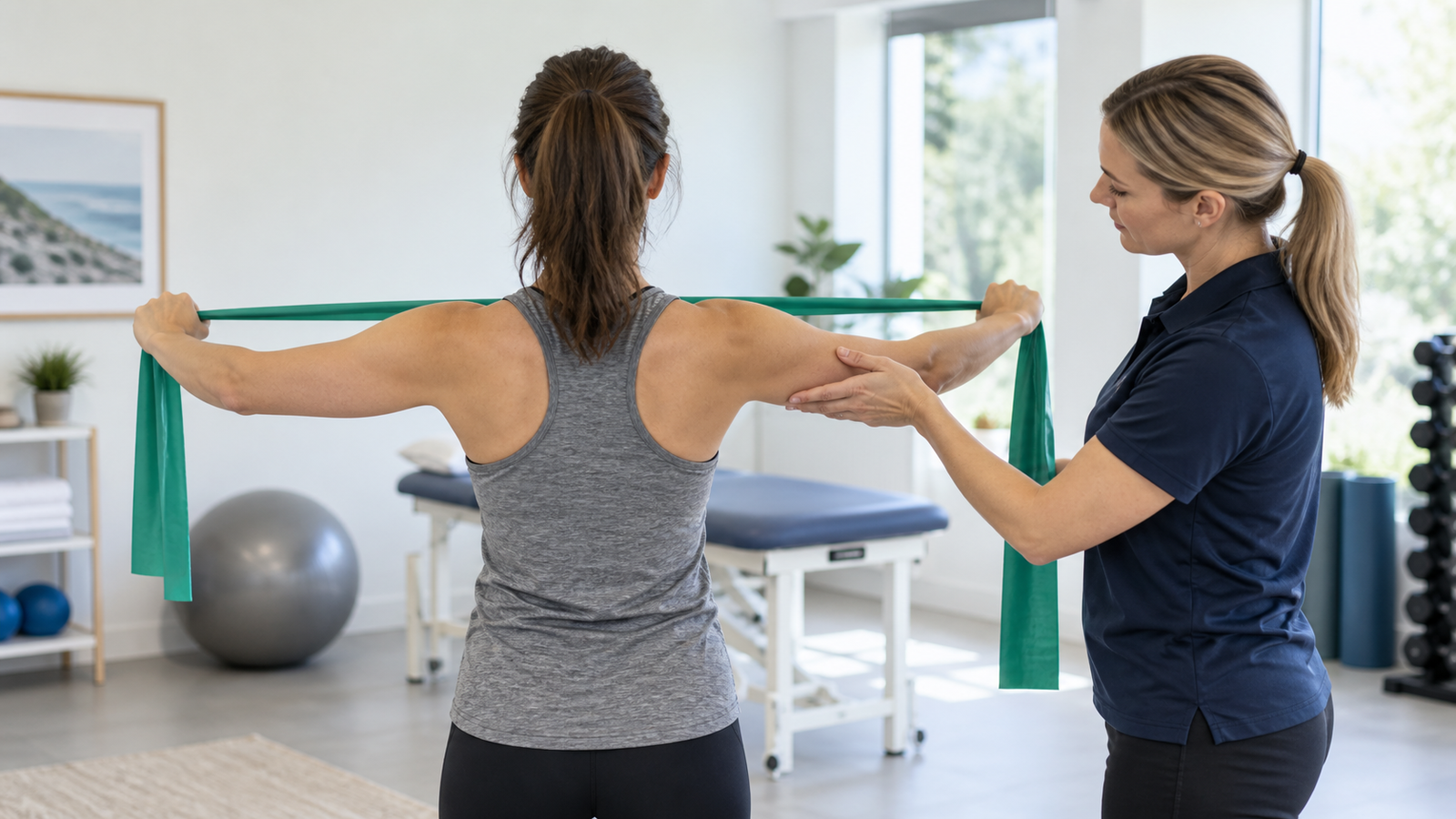
Rotator cuff-related shoulder pain is common and does not automatically mean something is torn or permanently damaged. Many people improve with an assessment, sensible activity changes and a progressive exercise plan. A scan is not automatically needed for every sore shoulder.
What is rotator cuff shoulder pain?
The rotator cuff is made up of four muscles and their tendons. Together, they help keep the ball of the upper arm controlled in the shoulder socket while you reach, lift and rotate your arm. Rotator cuff-related shoulder pain is a broad term for pain around the outside or front of the shoulder that becomes noticeable with lifting, reaching overhead, carrying or lying on that side.
Why does my shoulder hurt when I lift my arm?
Shoulder pain when lifting the arm can have several contributors. A recent increase in gym training, repetitive work, a new sport, a fall, reduced shoulder strength or simply doing more than your shoulder is currently used to can all be relevant. The useful question is usually how your shoulder responds to different amounts of load and how to rebuild capacity safely.
Do you need a scan for rotator cuff pain?
Not necessarily. Imaging can be helpful when the result is likely to change management, such as after significant trauma, with marked weakness, or where a clinician suspects a more significant injury. Scans also commonly show age-related tendon changes in people with no shoulder pain. A physiotherapist can assess your symptoms and explain whether imaging may be useful in your situation. Read our guide on when an X-ray or scan may be helpful.
Can rotator cuff exercises help?
For many people, yes. Exercise rehabilitation can improve shoulder strength, confidence and tolerance for the activities that matter to you. The right exercises depend on your starting point and may include shoulder movement, isometric holds, resistance-band work, rows, pressing, pulling or gradual overhead exercises.
Start with a tolerable amount
Exercise should be challenging enough to encourage adaptation, but not so aggressive that it repeatedly causes a substantial flare-up. Some mild, short-lived discomfort can occur during rehabilitation; what matters is how symptoms settle later that day and the following morning.
Progress gradually
As your shoulder becomes more comfortable and capable, rehabilitation can progress through resistance, repetitions, range of movement and task-specific exercises. If you need to return to work, gym training or sport, the later stages should reflect those demands.
Should you rest a sore shoulder?
Short-term modification can be sensible after an acute flare-up, but complete rest for long periods can leave the shoulder less prepared for normal life. Often, the better approach is to keep the shoulder moving within a comfortable range, temporarily reduce aggravating loads and then build back up in a planned way.
What might physiotherapy involve?
At an assessment, we discuss how your pain began, your work, sport and training, which tasks are difficult, sleep, previous injuries and your goals. We then assess relevant shoulder and neck movement, strength and functional tasks. Treatment may include education, hands-on treatment when appropriate and a tailored exercise program. At One Stop Physio Moorebank, physiotherapy in Moorebank can help you understand what is contributing to your symptoms and make a plan that fits your life.
When should you seek urgent medical advice?
Seek prompt medical assessment after a significant accident or fall, if you cannot lift the arm after an injury, if the shoulder looks deformed, or if you develop severe or progressive weakness, numbness, fever or feel otherwise unwell. Call Triple Zero (000) if you believe you are experiencing a medical emergency.
Rotator cuff rehabilitation in Moorebank
Shoulder pain does not need to become the reason you stop training, avoid work tasks or put up with poor sleep. One Stop Physio Moorebank provides assessment and rehabilitation for shoulder concerns at 132 Nuwarra Road, supporting patients from Moorebank, Liverpool, Chipping Norton, Wattle Grove, Hammondville and surrounding South West Sydney suburbs. If shoulder pain is persisting or you are unsure how to return to lifting, sport or normal activity, book a physiotherapy assessment with our Moorebank team.
Frequently asked questions
How long does rotator cuff shoulder pain take to improve?
Recovery varies. It depends on the irritability of your symptoms, how long the problem has been present, your current capacity and the demands you are returning to. A progressive plan is usually more useful than expecting one universal timeframe.
Should I exercise through shoulder pain?
Some tolerable discomfort can occur during rehabilitation, but significant or worsening pain is a sign that the exercise plan may need adjustment. A physiotherapist can help you find an appropriate starting point.
Can I still go to the gym with rotator cuff pain?
Often, yes, with modifications. You may be able to continue comfortable lower-body and cardiovascular training while temporarily adjusting painful shoulder exercises and gradually rebuilding them.
Can physiotherapy help a rotator cuff tear?
Physiotherapy may be part of management for many shoulder tendon injuries. The appropriate approach depends on your symptoms, function, injury history and any imaging findings, so an individual assessment is important.
Sources and further reading
- Healthdirect: shoulder pain
- Versus Arthritis: shoulder pain
- One Stop Physio: Physiotherapy in Moorebank
Important: This article contains general health information and does not replace individual medical or physiotherapy assessment. Contact our Moorebank team if you need help deciding what to do next.
Ready to have your shoulder assessed?
If shoulder pain is regularly interfering with work, training or normal activities, book a physiotherapy assessment with our team at One Stop Physio Moorebank.
Shoulder pain · rotator cuff rehabilitation
Rotator Cuff Shoulder Pain: What Should You Do?
Shoulder pain when lifting your arm can make work, training, sleep and ordinary tasks feel surprisingly difficult. This guide explains what rotator cuff-related shoulder pain can involve, when a scan may help and how a gradual rehabilitation plan can rebuild comfortable movement and strength.
The short answer
Rotator cuff-related shoulder pain is common and does not automatically mean something is torn or permanently damaged. Many people improve with an assessment, sensible activity changes and a progressive exercise plan. A scan is not automatically needed for every sore shoulder.
What is the rotator cuff?
The rotator cuff is a group of four muscles and their tendons around the shoulder. They help keep the ball of the upper arm controlled in the shoulder socket while you reach, lift, rotate and carry. When this system is irritated or not coping well with current demands, pain can be felt at the front or outside of the shoulder and sometimes into the upper arm.
Rotator cuff-related shoulder pain is a broad description rather than one single diagnosis. It may involve tendon irritation, changes in strength or movement control, a recent overload, or a combination of factors. Other shoulder, neck and nerve-related problems can feel similar, which is why an individual assessment matters.
Common symptoms
People often notice one or more of the following:
- pain when lifting the arm, reaching overhead or putting something on a high shelf
- discomfort putting on a shirt, jacket or bra
- pain when carrying, pushing or pulling
- sleep disturbance, particularly when lying on the sore side
- a feeling of weakness, stiffness or reduced confidence using the arm
- symptoms after a change in work, gym training, sport, gardening or other repetitive activity.
These symptoms do not confirm a tear by themselves. Pain intensity, imaging findings and shoulder function do not always line up neatly, so the whole picture is more useful than any single sign.
Why does my shoulder hurt when I lift my arm?
Lifting is a demanding task for the shoulder. A recent jump in training volume, repetitive work above shoulder height, a new sport, a fall, reduced strength or simply doing more than the shoulder is currently accustomed to can all contribute. The aim is not to find one villainous movement; it is to understand what load is currently provoking symptoms and build tolerance back up.
Sudden onset
A fall, traction injury, shoulder dislocation or a sharp loss of function needs a more prompt assessment. The mechanism, level of weakness and ability to lift the arm guide the next step.
Gradual onset
Symptoms that build over weeks or months are often linked with accumulated load, reduced capacity or a change in routine. A planned return to activity is usually more useful than complete rest.
Do you need a scan for rotator cuff pain?
Not necessarily. A clinician can often make an initial plan from your history and physical assessment. Imaging may be useful when the result is likely to change management, such as after significant trauma, with marked weakness, when symptoms are not improving as expected or when another condition is suspected.
X-rays are sometimes used to look for other explanations for shoulder pain. Ultrasound or MRI can show the rotator cuff in more detail, but scans can also show age-related tendon changes in people without shoulder pain. That is why a scan result needs to be interpreted alongside your symptoms and function. Read our guide on when an X-ray or scan may be helpful.
Can rotator cuff exercises help?
For many people, yes. Exercise rehabilitation aims to improve shoulder strength, movement confidence and tolerance for the tasks that matter to you. The right starting point depends on your symptoms, current ability, work and training demands, and any relevant health history.
Stage 1: Settle an irritable shoulder
In an early flare-up, it can help to temporarily reduce the specific activities that are repeatedly provoking symptoms while keeping the shoulder moving within a tolerable range. This might mean changing overhead work, the load lifted at the gym or how long you spend on one task, rather than avoiding all movement.
Stage 2: Restore comfortable movement and control
Once the shoulder is tolerating everyday movement better, rehabilitation may include gentle range-of-motion work, isometric holds and controlled exercises for the shoulder blade and rotator cuff. The goal is a confident base, not an aggressive stretch or a race to lift as high as possible.
Stage 3: Build strength
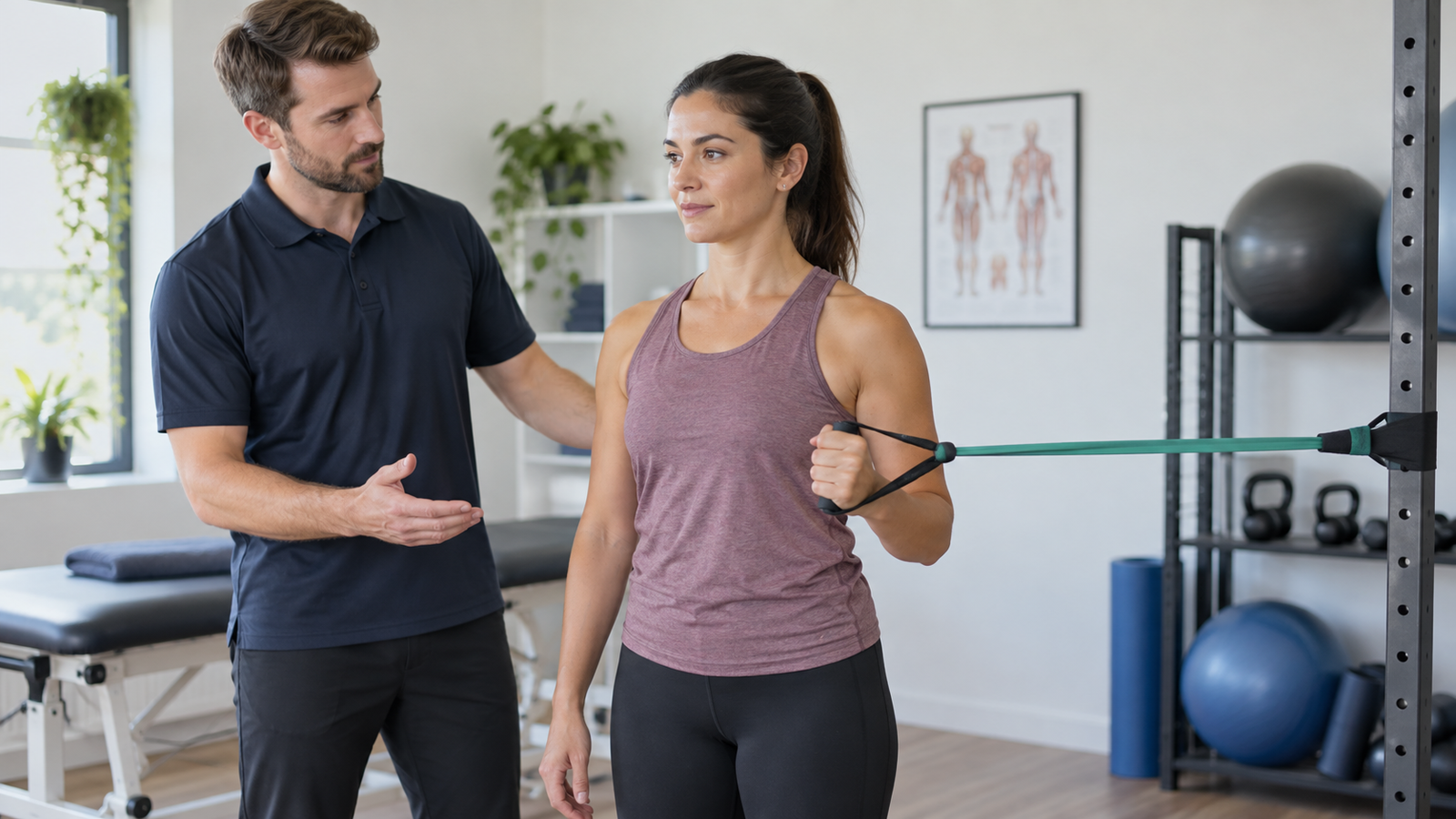
Strength work may progress through resistance-band exercises, rows, pressing and pulling patterns, external rotation, elevation exercises and other movements selected for you. Resistance, repetitions, range and speed can all be progressed gradually.
Stage 4: Return to the activities you value
Later rehabilitation should resemble the activities you want to return to. For a worker, that may mean lifting, reaching or carrying. For a gym member, it may mean progressing pressing, pulling or overhead work. For sport, it may include speed, endurance and sport-specific movements. Being comfortable at rest is useful, but it is not the same as being ready for every demand.
How much discomfort is acceptable during rehabilitation?
Some mild, short-lived discomfort can occur while rebuilding capacity. A helpful check is how the shoulder settles later that day and the following morning. A substantial flare-up, worsening night pain or symptoms that do not settle can mean the exercise, load or volume needs adjustment. Your physiotherapist can help you find a useful starting point rather than relying on a one-size-fits-all online program.
Should you rest a sore shoulder?
Short-term modification can be sensible after an acute flare-up. Complete rest for a long time, however, can leave the shoulder less prepared for normal life. Often the more useful middle ground is to keep moving comfortably, reduce aggravating load for a time and then build it back up in a planned way.
Sleep and daily activities
Sleeping with the sore shoulder directly underneath you can be uncomfortable. Some people find a pillow supporting the arm in front of the body or between the arm and chest helps. During the day, breaking up repetitive reaching, using two hands for heavier tasks and keeping frequently used items at a comfortable height can make the shoulder easier to manage while rehabilitation progresses.
Can I still go to the gym?
Often, yes, with modifications. You may be able to continue lower-body and cardiovascular training while temporarily adjusting painful shoulder exercises. A good plan identifies what you can still train, what needs a short-term change and how to progressively reintroduce the movements you enjoy.
What might physiotherapy involve?
At an assessment, we discuss how your pain began, your work, sport and training, which tasks are difficult, sleep, previous injuries and your goals. We then assess relevant shoulder and neck movement, strength and functional tasks. Treatment may include education, hands-on treatment where appropriate and a tailored exercise program.
At One Stop Physio, physiotherapy in Moorebank can help you understand what is contributing to your symptoms and make a plan that fits your life rather than giving you a generic list of exercises.
How long does rotator cuff shoulder pain take to improve?
Recovery is individual. It depends on how long symptoms have been present, current strength and confidence, the demands you are returning to and how consistently the plan can be progressed. The important measure is usually a gradual trend toward more comfortable movement and better function, rather than one universal deadline.
When should you seek urgent medical advice?
Seek prompt medical assessment after a significant accident or fall, if you cannot lift the arm after an injury, if the shoulder looks deformed, or if you have severe or progressive weakness, numbness, fever, redness or feel otherwise unwell. Call Triple Zero (000) if you believe you are experiencing a medical emergency.
Rotator cuff rehabilitation in Moorebank
Shoulder pain does not need to become the reason you stop training, avoid work tasks or put up with poor sleep. One Stop Physio Moorebank provides assessment and rehabilitation for shoulder concerns at 132 Nuwarra Road, supporting patients from Moorebank, Liverpool, Chipping Norton, Wattle Grove, Hammondville and surrounding South West Sydney suburbs.
If pain is persisting or you are unsure how to return to lifting, sport or normal activity, book a physiotherapy assessment with our Moorebank team.
Frequently asked questions
Can physiotherapy help a rotator cuff tear?
Physiotherapy can be part of management for many shoulder tendon injuries. The appropriate approach depends on your symptoms, function, injury history and imaging findings, so an individual assessment is important.
Does shoulder pain when lifting always mean a tear?
No. Pain when lifting can have several causes, including a temporary overload, tendon irritation, stiffness, reduced capacity or another shoulder or neck-related problem. Assessment helps identify the most appropriate next step.
Should I keep exercising if my shoulder hurts?
Many people can keep active with modifications, but the right amount depends on how symptoms respond. Significant or worsening pain is a sign the program may need adjustment.
Can a scan show why my shoulder hurts?
A scan can be useful in selected situations, but it is only one piece of the picture. Some tendon changes are common in people without symptoms, so results need to be considered with your history and examination.
Can I prevent rotator cuff problems?
Not every problem is preventable, but building shoulder strength gradually, warming up for sport, varying repetitive work and avoiding sudden spikes in overhead load can help your shoulder tolerate what you ask of it.
Sources and further reading
- Healthdirect: Rotator cuff injury
- Healthdirect: Shoulder pain
- AAOS: Rotator cuff and shoulder conditioning program
- One Stop Physio: Physiotherapy in Moorebank
Important: This article contains general health information and does not replace individual medical or physiotherapy assessment.
Ready to have your shoulder assessed?
If shoulder pain is regularly interfering with work, training or normal activities, book a physiotherapy assessment with our Moorebank team.