


Back health · general information
Is bending your back when lifting bad?
Bending is a normal spinal movement. Whether lifting feels comfortable depends on the load, repetition, fatigue, task and your current capacity—not on one “perfect” posture.
The short answer
No single back position is universally safe or unsafe. Your spine is designed to move, including bending forward (flexion) and straightening (extension). Problems are more likely when the demand of a task is greater than your current tolerance, for example an unfamiliar heavy load, many repetitions, poor recovery or lifting while tired.
If you have pain, the goal is not always to avoid bending forever. A useful plan often involves finding tolerable ways to move, keeping active where appropriate and building capacity gradually.
Where the “straight back” advice comes from
Advice to keep the back straight is well meant and can be a useful option, especially for heavy or awkward loads. The problem is when it becomes a rule that any bending is dangerous. Australia’s Low Back Pain Clinical Care Standard identifies the belief that pain and activity are harmful as a factor associated with slower recovery. Feeling fearful of bending can lead people to move stiffly, avoid useful activity and lose confidence, which may make everyday tasks harder.
What matters during lifting
Different tasks call for different strategies. Consider:
- Load: reduce weight or split it into smaller parts when practical.
- Distance: bringing a load closer to your body can reduce effort.
- Repetition and fatigue: pace repeated work and use breaks or task variation.
- Grip and footing: stable contact and a secure grip can improve control.
- Confidence and symptoms: choose a starting position that feels manageable, then progress over time.
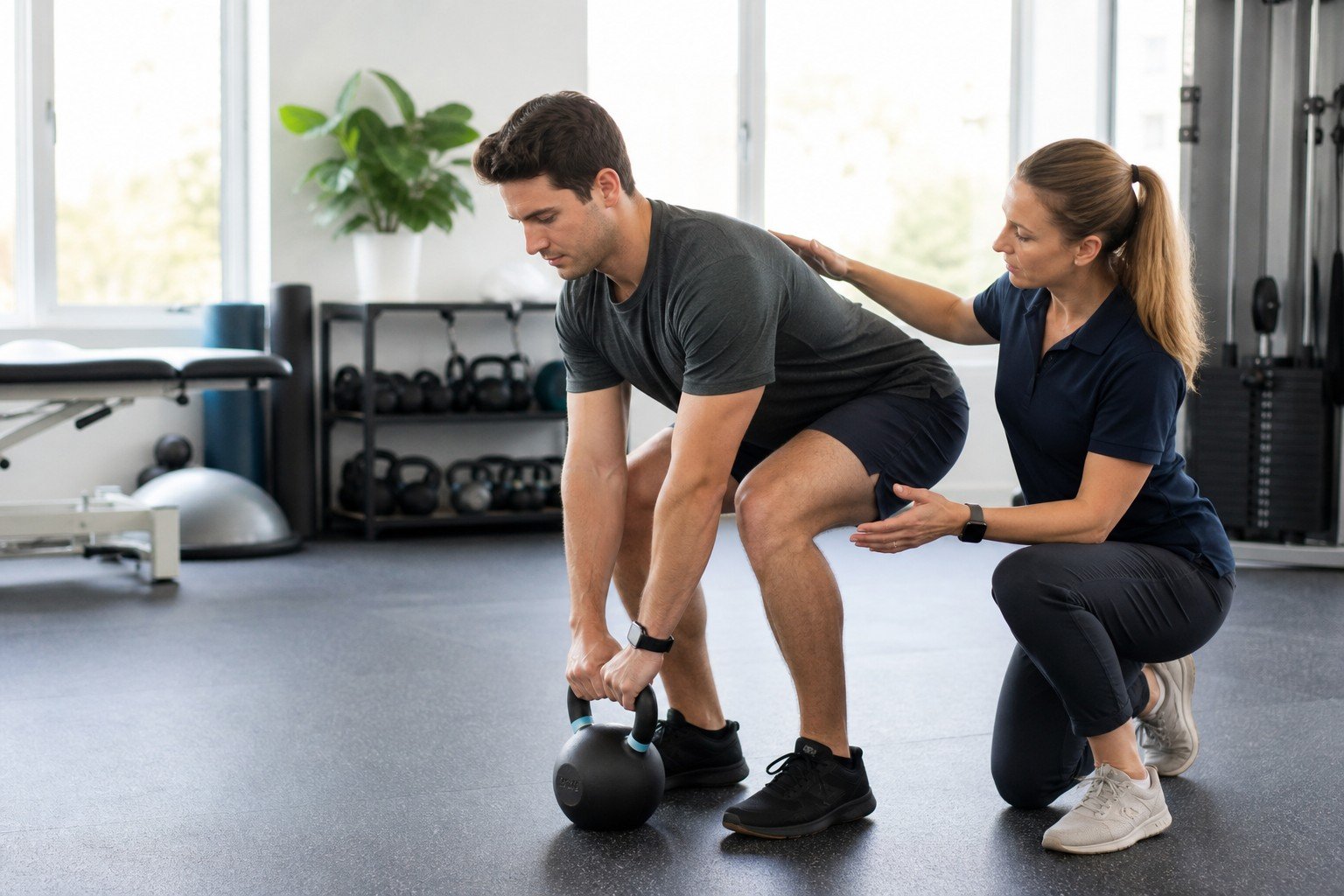
A squat, hip hinge, staggered stance or some spinal movement can all be reasonable depending on the person and task. Workplace manual handling requirements still apply.
Practical lifting options
- Plan the route and clear obstacles before you lift.
- Test the load before committing to the movement.
- Keep the object close when practical, and turn your feet rather than twisting quickly under a heavy load.
- Use help or mechanical equipment when the load exceeds a safe individual or workplace limit.
- Build lifting volume and weight gradually instead of making a sudden large increase.
- Vary positions across the day rather than trying to hold one posture continuously.
Lifting at work
Many people around Moorebank and Prestons work in warehousing, logistics, trades, construction and care roles where lifting is part of the job. Follow your workplace’s manual handling procedures, report hazards, and use trolleys, lifting aids or a second person where required. Healthdirect lists following safe manual handling guidelines among the ways to help prevent back pain at work. After time off or a change in duties, a gradual return to full lifting load is usually more comfortable than going straight back to your previous volume.
Lifting in the gym
Exercises such as deadlifts, kettlebell swings and rows involve controlled bending and can be a good way to build strength. As with work tasks, the key is choosing a load you can manage, progressing gradually and allowing recovery. If an exercise aggravates your symptoms, changing the range, load or speed is often better than stopping altogether.
If your back is already sore
Many episodes of non-specific back pain improve, and staying gently active is often more helpful than prolonged bed rest. Healthdirect advises that staying active and returning to regular activities as soon as possible is the best way to recover. Temporarily changing the load, range or speed of a task can make movement more manageable without treating your back as fragile.
Consider an assessment if pain is severe, worsening, repeatedly limiting work or daily activity, follows significant trauma or is not improving as expected. A physiotherapist can assess your presentation and help plan a graded return to lifting.
Seek urgent medical care for warning symptoms
Call Triple Zero (000) or seek urgent medical assessment if back pain follows major trauma or occurs with new bladder or bowel difficulty, numbness around the saddle area, rapidly worsening weakness, fever or serious illness. Do not wait for a routine physiotherapy appointment when symptoms may be time-critical.
Frequently asked questions
Is it bad to lift with a rounded back?
Not automatically. A rounded back is a normal movement. Load, fatigue and your current capacity usually matter more than the exact shape of your spine.
Should I squat or bend to pick things up?
Either can be reasonable. Choose what feels comfortable for the task, keep the load close and stay within your capacity.
Can I keep lifting with back pain?
Often you can modify lifting rather than stop completely. Reduce the load or range, then build back up. Seek assessment if pain is severe or not improving.
Can physio help me get back to lifting at work?
Yes. Our physiotherapists can assess your back and plan a graded return to lifting that matches your job demands.
Sources and further reading
- Healthdirect: back pain overview
- Saraceni et al.: lumbar flexion during lifting and low-back pain
- Australian Commission on Safety and Quality in Health Care: Low Back Pain Clinical Care Standard
Important: This is general information, not a diagnosis or individual medical advice.
Need an individual assessment?
Our physiotherapists can assess pain and movement concerns and help you plan a graded return to lifting, work or training where physiotherapy is appropriate.