


Injury self-care · general information
Heat or ice for an injury: when might each help?
Heat and cold are optional comfort measures. Either may offer short-term symptom relief for some people, but neither is required for every injury or replaces an assessment when symptoms are concerning.
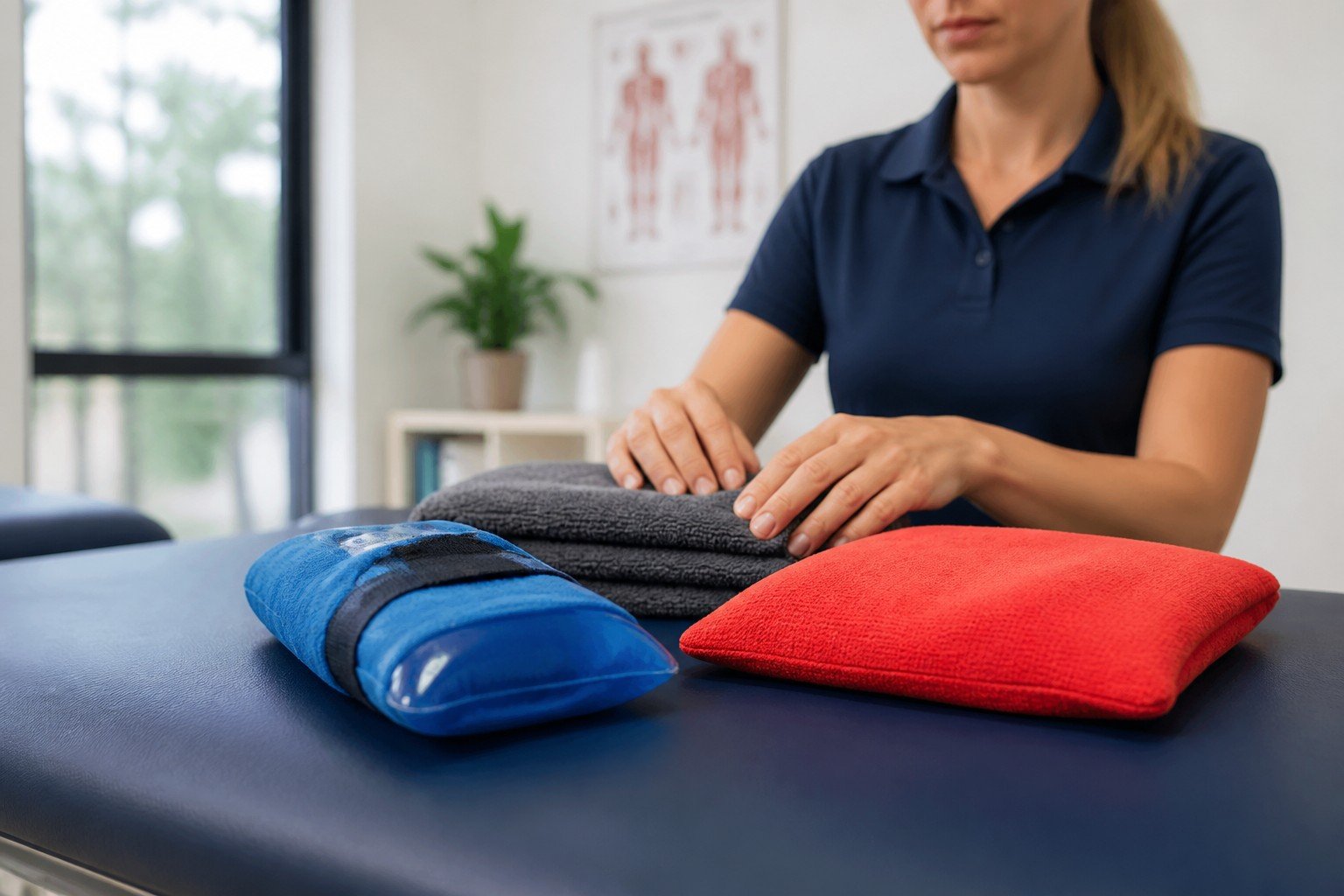
The short answer
Use the option that feels comfortable and is appropriate for your health and injury. Cold may temporarily reduce pain after some acute injuries. Heat may temporarily ease stiffness or help some people move more comfortably. The effect varies, so symptoms, skin safety, medical history and individual advice matter more than a rigid timetable.
When cold may help
A wrapped cold pack may offer short-term pain relief after a minor sprain, knock or flare-up. It does not need to feel painfully cold to be useful, and its effect on swelling and healing varies.
When heat may help
A warm pack may feel soothing for muscle stiffness, longer-lasting aches or before gentle movement. Avoid applying heat to an area that is acutely hot, very swollen, numb or where heat worsens symptoms.
How to use a pack more safely
- Follow the product instructions and use a cloth barrier between the pack and skin.
- Use a comfortable temperature rather than very hot or intensely cold treatment.
- Check the skin regularly and stop if there is burning, marked colour change, pain or excessive numbness.
- Do not sleep on a heat or ice pack.
- Ask a clinician before use if you have reduced sensation, poor circulation, fragile or broken skin, diabetes-related sensory change or another condition that affects temperature safety.
- Children and people unable to check or communicate skin sensation need close supervision.
A generic duration cannot account for every product or person. Short applications with regular skin checks are preferable to prolonged exposure.
What matters more than the pack
For many minor musculoskeletal injuries, an appropriate return to movement and activity is more important than relying on passive treatment alone. The right level of activity depends on the injury. A clinician can help when you are unsure about weight-bearing, exercise, work duties or sport.
Seek an assessment if pain is severe, worsening, follows significant trauma, prevents normal use of the area or is not improving as expected.
Get urgent help when symptoms are serious
Seek urgent medical care for a visibly deformed limb, suspected fracture or dislocation, an open wound over a significant injury, loss of circulation or sensation, rapidly worsening weakness, severe systemic illness or another symptom that makes you concerned. Call Triple Zero (000) for a medical emergency.
Sources and further reading
- Healthdirect: ankle pain and minor-injury self-care
- Better Health Channel: sprains and strains
- NSW Agency for Clinical Innovation/SIRA: managing low-back pain
Important: This is general information, not a diagnosis or individual medical advice.
Unsure what your injury needs?
A physiotherapy assessment can help clarify the presentation and guide an appropriate plan for movement, loading and recovery.